Whether you’re travelling off-grid, touring the country, towing a caravan or heading away for the weekend, a reliable 12V electrical system is essential.
Your fridge, lighting, communications equipment, battery chargers and other accessories all rely on a system that is correctly designed, installed and maintained.
A poorly matched battery, inadequate charging capacity, incorrect cable sizing or an overlooked electrical fault can quickly lead to flat batteries, unreliable equipment and unnecessary downtime.
Reliable 12V Power Starts With the Right Setup
At Laurie’s Auto Electrics, we design, install, diagnose and maintain 12V electrical systems for a wide range of vehicles, caravans, trailers and off-grid applications. Our focus is on building systems that are reliable, practical and suited to how you actually use your vehicle.
From simple dual-battery setups through to advanced lithium, solar and DC-DC charging systems, getting the fundamentals right from the beginning can make all the difference.
Let’s break down exactly how to build a reliable off-grid system that handles the tough Australian heat and keeps your gear running day and night.
AGM vs Lithium Iron Phosphate (LiFePO4) — which one wins in central Queensland heat?
Deciding between Absorbent Glass Mat (AGM) and Lithium Iron Phosphate (LiFePO4) is the first major step in planning your 12V upgrade. While AGM has been the standard starting and deep-cycle backup battery for decades, lithium technology has completely reshaped the off-grid market.
Here is how they compare across key categories:
| Feature | AGM Batteries | Lithium Iron Phosphate (LiFePO4) |
|---|---|---|
| Weight | Extremely heavy (~30kg to 35kg for a 100Ah battery) | Lightweight (~12kg to 15kg for a 100Ah battery) |
| Usable Capacity | 50% Depth of Discharge (DoD) to avoid damaging cells | 80% to 90% Depth of Discharge (DoD) safely |
| Lifespan | ~300 to 500 charge cycles | ~2,000 to 5,000+ charge cycles |
| Voltage Curve | Voltage drops steadily as it discharges | Maintains stable voltage output until completely empty |
| Charge Rate | Slower to absorb bulk current in the final stages | Charges rapidly, accepting high current safely |
Weight and space savings
A standard 100Ah AGM battery weighs roughly 30kg. If you want 100Ah of usable capacity, you actually need 200Ah of AGM battery bank, which adds a massive 60kg to your vehicle’s gross vehicle mass (GVM). By comparison, a single 100Ah lithium battery weighs just 12–15kg and provides up to 90Ah of usable capacity. That is a weight saving of nearly 75%, preserving precious cargo capacity for your off-road adventures.
Depth of discharge (DoD)
An AGM battery should never be discharged below 50% of its capacity, or you risk permanently reducing its lifespan. Lithium batteries can be drained up to 80% or 90% repeatedly without damaging the internal cell structure. This means a 100Ah lithium battery gives you almost double the practical runtime of a 100Ah AGM.
Heat tolerance and voltage stability
Standard car battery replacement in Rockhampton often involves swapping out under-bonnet batteries that have cooked under the intense Central Queensland sun. AGM batteries have a wider physical mounting tolerance but suffer from diminished lifespan when exposed to sustained engine bay heat. Lithium batteries offer superior cycle life but require strict management of charging temperatures, which we will address next.
What about lithium in the central Queensland heat?
Central Queensland’s summer temperatures routinely cross 40°C, and under-bonnet temperatures can climb past 80°C. This makes heat the number-one enemy of any 12V dual battery system.
If you are considering a lithium upgrade, you must understand how heat affects the chemistry:
- Operating temperatures: Most premium LiFePO4 cells are rated to operate safely up to 60°C. If battery temperatures exceed this limit, the internal safety mechanisms will trigger.
- Charging temperature limits: Lithium batteries generally cannot be safely charged when the ambient cell temperature drops below 0°C or rises above 45°C to 55°C (depending on the manufacturer). Charging a hot lithium cell can permanently degrade its capacity.
- The battery management system (BMS): Every high-quality lithium battery has an integrated BMS. This electronic brain monitors cell temperature. If the battery gets too hot under the hood, the BMS will shut down charging or discharging to prevent thermal runaway.
- Engine-bay heat shielding: Slapping a cheap lithium battery under the bonnet of a 4WD in Rockhampton is a recipe for system shut-offs. If a battery must go under the hood, it must be an under-bonnet lithium battery system specifically engineered to handle high temperatures, complete with heat shielding and a specialized thermal BMS.
For most modern touring vehicles, we recommend installing lithium batteries inside the cabin, behind the seats, or in the canopy to isolate them from extreme engine heat and ensure maximum longevity.
Mounting locations: Under-bonnet, behind-seat or canopy/tub?
Where should your auxiliary battery go? The answer depends on your vehicle type, cabin space, and power needs.
Under-bonnet
- Pros: Keeps the cabin and tub completely free for cargo; short cable runs to the starter battery.
- Cons: Extremely tight space in modern common-rail diesel engine bays; subjects the battery to extreme heat and high vibrations.
- Best suited for: Heavy-duty AGM or specially rated under-bonnet lithium batteries (like specific heat-tolerant dual battery installations).
Behind-seat (Modern dual-cabs)
- Pros: Utilises dead space behind the rear seats; keeps the battery completely isolated from engine heat; protected from dust and water.
- Cons: Limits battery size (typically restricted to slimline 100Ah or 110Ah lithium designs).
- Best suited for: Toyota Hilux, Ford Ranger and Isuzu D-Max dual-cabs looking for a clean, out-of-sight custom behind-seat lithium setup.
Canopy / tub builds
- Pros: Ample space for large battery banks (200Ah to 300Ah+); room to mount large inverters, switch panels and DC-DC chargers; excellent ventilation.
- Cons: Requires running heavy-gauge cabling from the front engine bay to the rear of the vehicle; consumes cargo space in the tub.
- Best suited for: Serious off-grid tourers, canopy builds and canopy-mounted induction cooking systems.
Popular vehicle-specific configurations (our specialty)
No two 4WDs are wired the same way. When we perform a 4WD 12V upgrade in Rockhampton, we tailor the system to your specific vehicle model:
Toyota Hilux (2015+) — Custom behind-seat lithium setup
Modern Hilux models have practically zero room under the bonnet for an auxiliary battery. We specialise in custom behind-seat lithium brackets. By mounting a 100Ah or 120Ah slimline lithium battery behind the rear seats, we keep the battery cool and protect your valuable tray space. This setup integrates perfectly with a REDARC DC-DC charger mounted on a custom bracket.
Toyota LandCruiser (70 & 200 Series) — Heavy-duty dual setup
For LandCruisers, we often design heavy-duty dual battery installations. The 70 Series can accommodate a stout under-bonnet auxiliary battery, whereas the 200 and 300 Series often benefit from rear drawer-system installations. Given these vehicles are frequently used for heavy towing and remote touring, we often pair them with a REDARC BCDC charger and dual Anderson plugs for caravan power.
Ford Ranger (Next-Gen & PX Series) — Smart alternator integration
Modern Fords use variable-voltage “smart” alternators designed to reduce fuel emissions. A smart alternator drops vehicle voltage once the starting battery is charged. This means a traditional parallel isolator will fail to charge an auxiliary battery. We install smart-charger-compatible DC-DC systems that read the vehicle ignition signals to charge your secondary battery to 100% every single drive.
Isuzu D-Max & Mazda BT-50 — Canopy 12V control hubs
For D-Max owners looking to run fridges and camp lighting, canopy-mounted boards are the ultimate choice. We build custom aluminum 12V panels pre-wired with DC-DC chargers, solar inputs, Anderson plugs, USB outlets and battery monitors, keeping everything organised and easily accessible.
Do I actually need a dual battery?
Before spending money on a high-end dual battery installation in Rockhampton, it is worth asking if your style of camping actually requires one.
Single auxiliary battery / heavy-duty starter
If you only run a small 12V fridge occasionally for day trips or overnight stays, you might get away with an upgraded high-crank, deep-cycle starting battery. However, you risk draining your primary battery and finding yourself stranded.
Portable power stations
A portable power station (lithium “all-in-one” box) can be a good option if you want a system where you can move between your 4WD, boat and home. The downside is that they can be bulky, harder to charge rapidly while driving, and difficult to integrate cleanly into your vehicle’s factory wiring.
Dedicated 4WD dual battery system
If you are planning multi-day off-grid camping trips, towing a caravan, running 12V camp lighting, or operating high-draw appliances like inverters, a dedicated, hardwired dual battery system is non-negotiable. It separates your vehicle’s starting system from your camping accessories, guaranteeing that your truck will start every single morning regardless of how long you run your camp fridge.
What size dual battery do I need? (The power estimator)
To choose the right battery capacity, you must calculate your daily power consumption.
Approximate Battery Size (Ah) = [ Daily Energy Consumption (Ah) × Desired Days Off-Grid ] ÷ Usable Battery Capacity (%)
Typical 12V camp appliance power draws
- 45L portable fridge freezer: 30Ah to 40Ah per day (highly dependent on ambient temperature)
- LED camp lighting (4 hours): 4Ah to 6Ah per day
- Smart phone/tablet charging: 2Ah to 4Ah per day
- Starlink internet (active use): 3A to 5A per hour (30Ah to 50Ah per day)
- 12V CPAP machine (8 hours): 10Ah to 20Ah per night
- 1000W inverter (running coffee machine/appliances): 80A to 100A (while active; high drain, short duration)
Standard system configurations
- The weekend camper (100Ah Lithium / AGM): Perfect for running a 40L fridge, camp lights and phone chargers for 1 to 2 days without driving.
- The remote tourer (200Ah Lithium): Designed for extended stays. Comfortably powers a 75L dual-zone fridge, LED lights, water pumps, mobile devices and a 1000W inverter for a couple of days.
- The ultimate off-grid setup (300Ah+ Lithium): Built for the serious traveller. Capable of running induction cooktops, 12V air conditioners, Starlink, microwave ovens and charging power tools through large 2000W to 3000W inverters.
How long will my dual battery last?
Here is a quick look at real-world runtimes when running a standard 50L camp fridge (drawing ~35Ah per 24 hours) and basic lighting, with zero charge input (no driving, no solar):
| Battery Setup | Usable Capacity (Ah) | Weight | Est. Fridge & Lights Runtime | Recommended Use Case |
| 100Ah AGM | ~50Ah (50% limit) | ~30kg | 1 to 1.5 Days | Overnight camps, short weekend getaways |
| 100Ah Lithium | ~85Ah (85% limit) | ~13kg | 2 to 2.5 Days | Regular weekend touring, light-draw setups |
| 200Ah Lithium | ~170Ah (85% limit) | ~25kg | 4 to 5 Days | Extended remote camping, running extra accessories |
| 300Ah Lithium | ~255Ah (85% limit) | ~38kg | 7+ Days | Off-grid powerhouses with induction & inverters |
Note: Runtimes will shorten if ambient temperatures rise, as fridges must work harder and draw more current in the Central Queensland heat.
What size DC-DC charger do I need?
A DC-DC charger acts as the brain of your dual battery system, converting the power from your vehicle’s alternator into the exact voltage profile your auxiliary battery needs.
Choosing the right charger size is critical:
- 25-Amp charger (eg. REDARC BCDC1225D): Best suited for single 100Ah AGM or lithium batteries. It delivers a steady charge without overloading standard alternators or smaller lithium cells.
- 40-Amp / 50-Amp charger (eg. REDARC BCDC1250D): Ideal for larger battery banks (200Ah+ lithium). It charges your system twice as fast, which is critical if your daily driving times are short.
Critical tech considerations
- Vehicle alternator limitations: Your vehicle’s alternator has a maximum current output rating. Drawing too much power to charge a massive auxiliary battery can overheat and damage the alternator.
- Cable sizing and distance: Heavy-gauge cabling (minimum 8B&S or 6B&S) is required between the engine bay and the auxiliary battery to prevent voltage drop over long distances, particularly in canopy setups.
- Smart alternator profile: As a REDARC DC-DC charger installer in Rockhampton, we ensure the charger is correctly wired to detect the ignition source so your secondary battery charges reliably even when the alternator enters low-voltage eco modes.
4WD Solar sizing: Keeping your system topped up
While driving charges your battery via the alternator, solar is what keeps you powered once you park up at camp.
Fixed roof panels vs portable solar blankets
- Fixed panels: Mounted to your roof rack or canopy. They charge your system constantly while driving and require zero setup. However, they require you to park your vehicle in the sun, which can make your cabin or tent incredibly hot.
- Portable solar blankets: Allow you to park your 4WD in the cool shade of a tree while running a long cable out to place the blanket in direct sunlight. They are lightweight and highly efficient, but they must be packed away whenever you leave camp to prevent theft.
The realities of solar output in Central Queensland
A “200-Watt” solar panel does not generate 200 Watts all day. Dust, cloud cover, atmospheric haze, and panel angle all reduce efficiency. In real-world Australian conditions, you should expect roughly 5 to 6 hours of peak solar production per day.
- A 200W panel typically yields about 60Ah to 80Ah of charge back into your battery on a clear day.
- We recommend pairing your solar blanket with a dedicated MPPT solar controller (often built into premium DC-DC chargers like the REDARC BCDC series) to extract the absolute maximum amount of energy from the CQ sun.
10 common 12V dual battery installation mistakes
Our workshop regularly repairs DIY and low-cost installations that have failed. Here are the top ten mistakes to avoid:
- Installing too small a battery: Failing to calculate appliance power draw, leading to dead batteries by day two.
- Underestimating the CQ heat: Mounting lithium batteries under the bonnet without proper heat ratings or thermal shielding.
- Using undersized cabling: Installing thin speaker wire or low-amp automotive cable, causing severe voltage drop, slow charging or melted wires.
- Omitting circuit protection: Running heavy-gauge live cables from the starter battery to the rear without fuses or circuit breakers near the battery terminals, creating an extreme fire hazard.
- Wrong DC-DC charger settings: Failing to configure the charger’s chemistry profile, which leads to undercharging or permanently damaging expensive lithium batteries.
- Neglecting smart alternator characteristics: Wiring a system without an ignition trigger on a modern vehicle, preventing the auxiliary battery from charging properly while driving.
- Poor earthing/grounding: Earthing the system to painted or weak chassis points, resulting in intermittent electrical faults.
- Assuming solar will always keep up: Not planning for cloudy days, shade or dirty panels that can drop solar output by 50% or more.
- Overloading low-draw connections: Attempting to run high-powered travel ovens or inverters through standard 12V cigarette sockets instead of heavy-duty Anderson plugs.
- Mixing battery chemistries in parallel: Connecting an old AGM battery directly in parallel with a new lithium battery, destroying both banks.
How much does a dual battery system cost in Rockhampton?
Because every vehicle and usage profile is unique, 12V dual battery prices vary. Here is an indicative breakdown (as of August 2026) of standard commercial price brackets in Central Queensland:
1. Basic touring setup (Indicative cost: $1,200 – $1,800)
- What you get: 100Ah heavy-duty AGM battery, 25A DC-DC charger, heavy-duty under-bonnet battery tray, primary circuit protection and basic cabin outlets (12V/USB).
- Best for: Weekend campers, run-of-the-mill fridge setups and budget-conscious travelers.
2. Premium off-grid setup (Indicative cost: $2,500 – $4,500)
- What you get: 100Ah to 120Ah slimline lithium battery (mounted behind the seat or in the tub), 40A/50A smart DC-DC charger with MPPT solar input, custom vehicle mounting brackets, professional circuit breakers, solar input plug and a digital battery monitor.
- Best for: Serious 4WD tourers, dual-cab owners, and individuals running larger fridges and electronic equipment over multiple days.
3. Ultimate canopy/touring build (Indicative cost: $5,000 – $9,000+)
- What you get: Large-scale 200Ah to 300Ah+ lithium battery banks, multi-stage vehicle charging, 2000W to 3000W pure sine wave inverter (to run household appliances, coffee makers and induction cooktops), custom distribution panels, smart control screens (like RedVision or Simarine), integrated solar arrays and custom fabrications.
- Best for: Full-time canopy builds, off-grid touring caravans and tradespeople needing heavy-duty 240V power on site.
Why professional, certified installation matters
Your vehicle’s electrical system is complex. Modern common-rail diesel engines and advanced safety electronics do not tolerate sloppy wiring.
Here is why having a certified professional handle your 12V upgrade is a smart investment:
- Vehicle warranty protection: Improper auto electrical work can void your new car warranty. A certified installer ensures all modifications meet manufacturer guidelines and Australian Wiring Standards.
- Off-Road durability: Corrugations, dust, water crossings and vibration will quickly shake loose poor connections. We use high-vibration-rated crimps, heavy-duty protective conduit and secure mounting brackets built to survive the outback.
- Safety and peace of mind: A shorted 12V auxiliary system can easily spark an engine bay or cabin fire. Our installations are fully fused with high-quality circuit breakers at every critical stage.
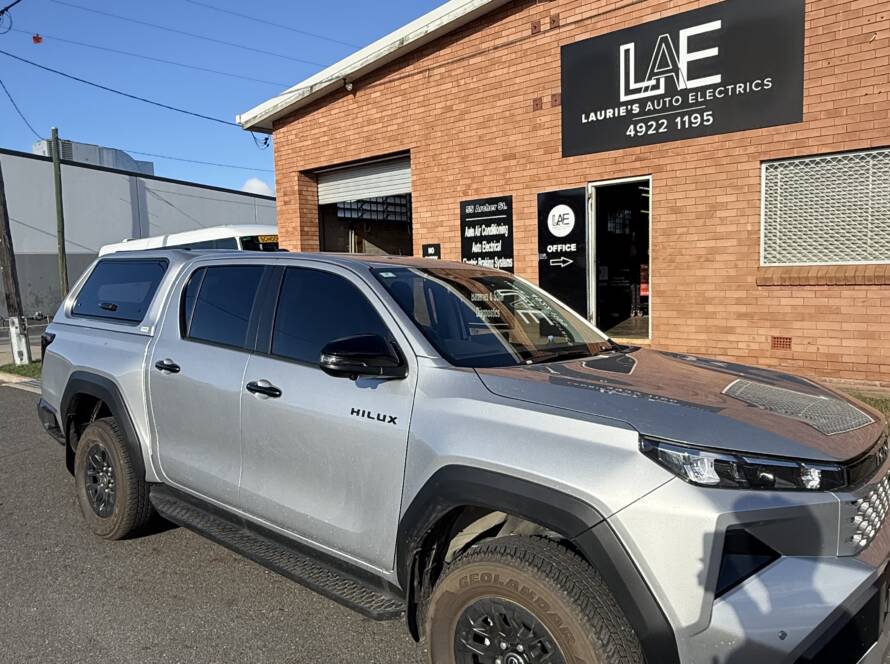
- Rockhampton’s trusted auto specialists: Established in 1989, Laurie’s Auto Electrics has been serving Central Queensland for over 30 years. Our certified team of auto electricians understands regional driving conditions and ensures your system is compliant, safe and built to last.
Frequently asked questions (FAQs)
Can I install a lithium battery under my bonnet?
Most standard lithium batteries cannot handle the extreme heat of an engine bay. However, there are specialised, heat-rated under-bonnet lithium batteries designed specifically for engine-bay applications, complete with high-temperature thermal cut-offs and protective casings. If you are unsure, speak with our team before purchasing.
Do I need a DC-DC charger if I already have a smart alternator?
Yes. Modern vehicles drop their voltage outputs to save fuel, which is insufficient to charge an auxiliary battery. A DC-DC charger takes whatever voltage your alternator is outputting and boosts it to the precise level required to charge your auxiliary battery to 100%.
How long does it take to charge a 100Ah lithium battery while driving?
With a 25-Amp DC-DC charger, it will take roughly 4 hours of driving to charge a fully discharged 100Ah lithium battery. With a 40-Amp charger, that charge time drops to around 2.5 hours, assuming your alternator has the spare capacity to output that current.
Can solar charge my starter battery and my dual battery?
A standard off-grid setup is designed so that your solar panels charge the auxiliary/dual battery system first. Some advanced DC-DC chargers (like the REDARC BCDC series) can back-charge your starting battery once the auxiliary battery is fully charged, keeping both systems topped up.
What is the advantage of a slimline lithium battery?
Slimline lithium batteries are engineered to fit into tight, otherwise unusable spaces, such as behind the rear seat of a dual-cab utility vehicle (like a Hilux or Ranger) or flat against the wall of a canopy, preserving your primary cargo space.
Why is my camp fridge cutting out even though my battery is full?
This is usually caused by voltage drop. If the wiring between your battery and the fridge is too thin, the voltage will drop significantly when the fridge compressor tries to start. The fridge detects this low voltage and shuts off to protect itself, even though the battery itself still has plenty of charge.
Plan your next off-grid adventure with Laurie’s Auto Electrics
Don’t risk getting stranded with warm drinks and a dead engine on your next CQ adventure. Whether you need a simple dual battery setup, an advanced off-grid canopy build or a reliable car battery replacement in Rockhampton, the experienced team at Laurie’s Auto Electrics is here to help.
Call our team today on 07 4922 1195, visit our workshop at 55 Archer St, Rockhampton or contact us online to get a free, tailored quote for your 4WD’s 12V system.
Let’s make sure your next trip is safe, comfortable and completely off-grid!